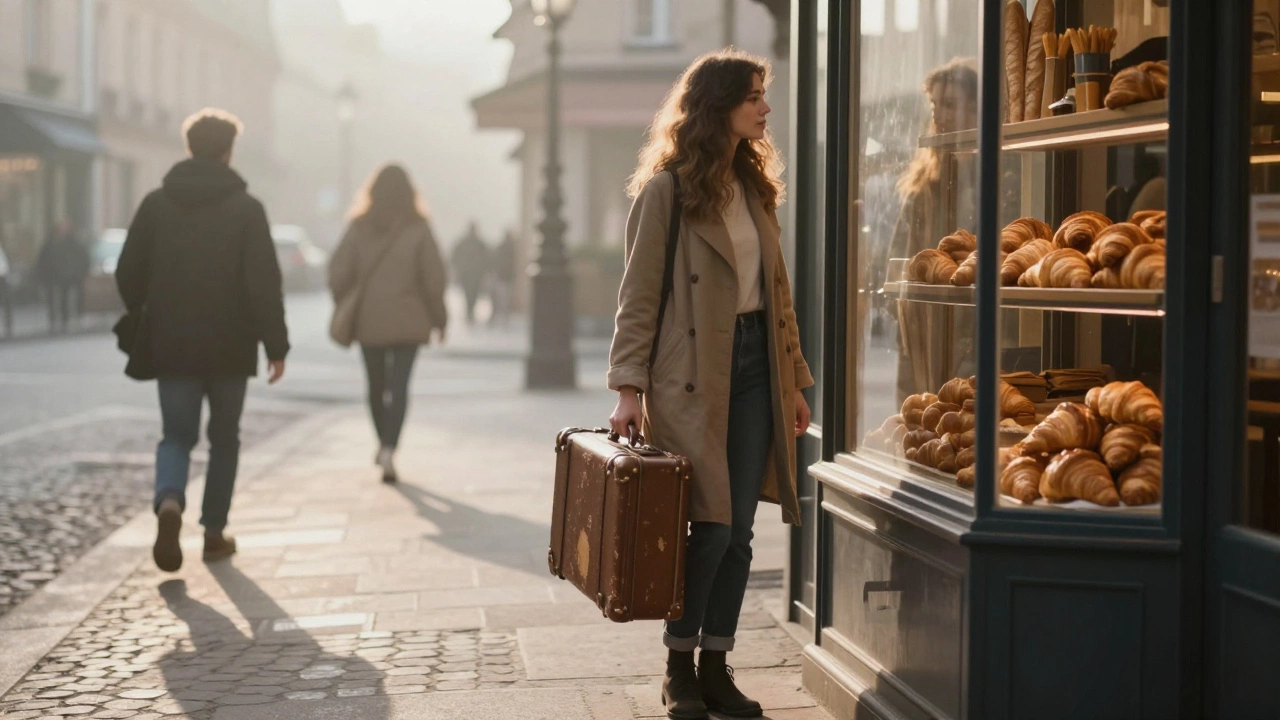
She arrived in Paris with two suitcases, a debit card with €800, and a list of French phrases she’d practiced until her tongue hurt. No job. No apartment. No plan beyond ‘see what happens.’ That’s how most people start over in a new country-not with a corporate relocation package or a visa sponsored by a tech giant, but with grit, a little luck, and a lot of silence. The city didn’t care that she’d never ridden the metro alone. It didn’t notice when she stood frozen in front of a boulangerie, unsure if she should point or say ‘un croissant, s’il vous plaît.’ Paris moves fast, and newcomers either adapt or get swallowed by the rhythm.
It’s easy to romanticize the idea of being a new girl in a new world. Instagram feeds are full of golden-hour selfies outside Montmartre and café tables with perfect lattes. But reality? It’s a 6 a.m. walk to the laundromat because your washing machine broke, and the only one nearby doesn’t take cards. It’s realizing you don’t know how to open a bank account without a French ID, and the clerk just shrugs and says, ‘Revenez demain.’ And sometimes, it’s scrolling through a site like escort parls out of loneliness, not desire, wondering if anyone here even notices you’re still learning how to exist.
First Weeks: The Silence Between Words
The first three weeks in Paris are a strange kind of isolation. You’re surrounded by people, but no one speaks your language. You learn to read body language faster than you learn French verbs. The baker smiles when you hand him cash, but doesn’t say ‘bonjour’ back. The woman on the bus gives you a seat, then looks away like she didn’t do anything special. That’s Paris. Kindness is quiet. Connection is earned.
You start noticing things no guidebook mentions: how the same café changes its vibe from morning to night, how the street cleaners work in perfect sync like a dance troupe, how the old man at the corner newsstand remembers your name after three visits. You realize you’re not invisible-you’re just not yet known.
Language: The Invisible Wall
French isn’t just a language. It’s a gatekeeper. Speak too quickly, and people switch to English, thinking you’re lost. Speak too slowly, and they assume you’re not trying. The truth? Most Parisians don’t expect perfection. They expect effort. A simple ‘Merci beaucoup’ after buying bread gets you a real smile. A ‘Pardon, je ne parle pas bien français’ before asking for directions? That’s gold.
You start carrying a small notebook. Not for grammar rules, but for phrases that actually work: ‘Où est la station la plus proche?’ ‘Je cherche un appartement.’ ‘C’est combien?’ You write them in messy cursive, underline the ones you use daily. After two months, you stop needing the notebook. That’s when you feel like you’re starting to belong.
Work: The Unwritten Rules
Getting a job without a work visa is hard. Getting one without French fluency? Nearly impossible. Most entry-level gigs-waitressing, cleaning, retail-require at least B1. But there are exceptions. Some expats find work through word-of-mouth: helping an English-speaking family with childcare, tutoring online students, doing freelance translation. One woman she met at a language exchange started offering virtual assistant services to American startups. No French needed. Just a laptop and reliable Wi-Fi.
But even those jobs come with hidden rules. You don’t ask for overtime. You don’t complain about hours. You show up early, stay late if needed, and never say ‘I’m just here temporarily.’ That phrase is a red flag. In Paris, commitment matters more than credentials.
Community: Where You Find Your People
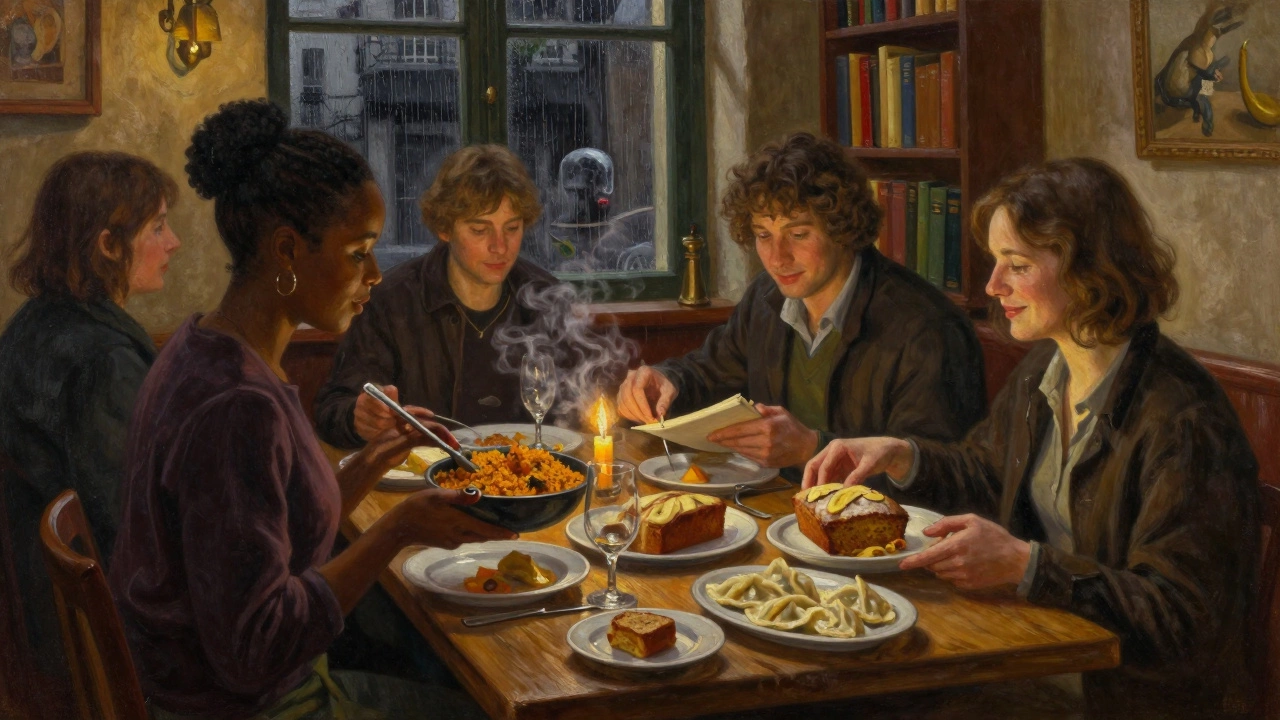
You don’t find friends in tourist bars or expat meetups. You find them in the small places: the yoga class on Rue des Martyrs, the community garden in the 19th arrondissement, the book club that meets in a basement café with no name. These aren’t curated events. They’re messy, unpredictable, and real. One night, she joined a potluck where everyone brought a dish from home. A Nigerian woman made jollof rice. A Polish man brought pierogi. She brought a banana bread she’d baked three times until it didn’t collapse.
That’s when she met Léa, who’d moved from Lyon three years earlier and now runs a small print shop. ‘You think you’re alone,’ Léa said, stirring her tea. ‘But everyone here is just trying to figure out how to be here.’
The Unexpected Turns
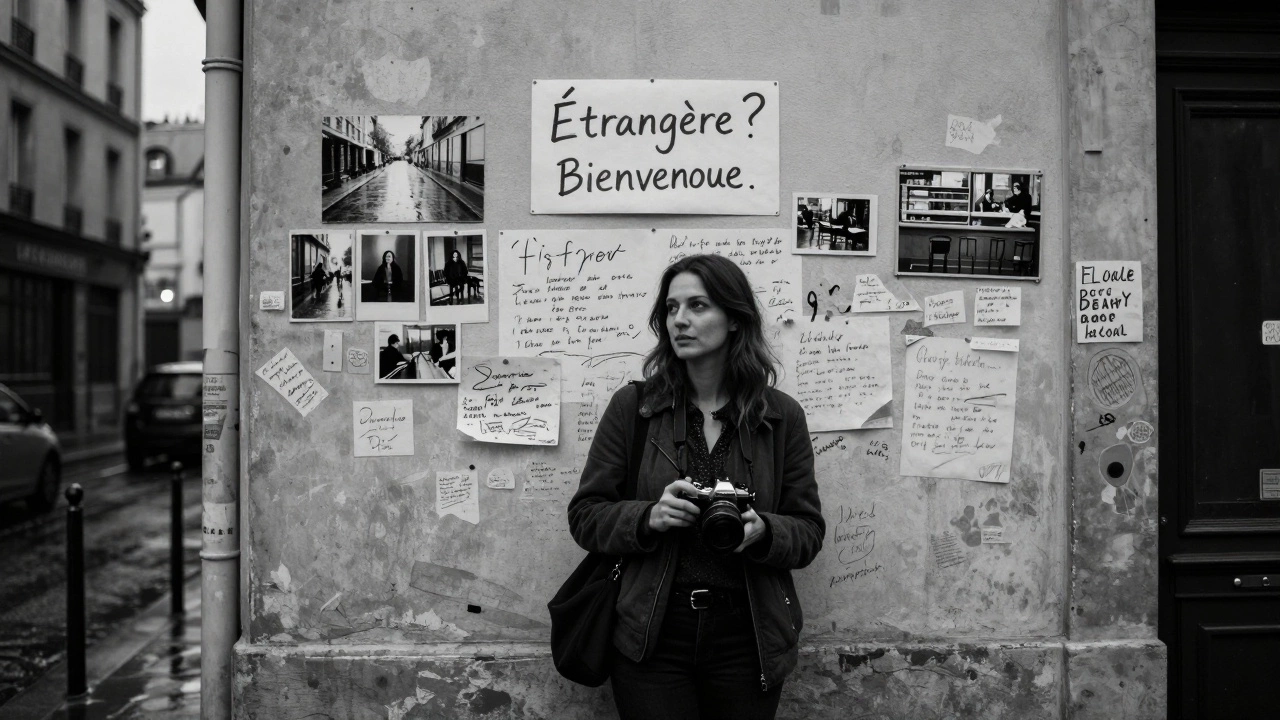
Three months in, she got a call from a local art gallery. They’d seen her photos on Instagram-black-and-white shots of Parisian alleyways, rain-slicked cobblestones, the back of a woman’s head walking away from the Seine. They wanted to feature her work. No pay, but exposure. She said yes. The opening night? She stood in the corner, silent, watching strangers pause at her images. One woman cried. Another took a photo with her phone and posted it with the caption: ‘This is the Paris no one shows you.’
That night, she walked home alone, listening to the echo of her boots on the pavement. She didn’t feel like a tourist anymore. She didn’t feel like a foreigner. She just felt like someone who belonged to the city now.
What You Learn When No One Is Watching
You learn how to be alone without being lonely. You learn that silence isn’t empty-it’s full of things you haven’t learned to hear yet. You learn that home isn’t a place you’re born in. It’s a place you choose, slowly, one small act at a time. A grocery run. A conversation with a neighbor. A photo you take because the light was perfect.
And sometimes, you learn that the people you thought would help you-the ones you followed online, the influencers who promised ‘easy expat life’-weren’t the ones who mattered. It was the quiet ones. The ones who didn’t post. The ones who just showed up.
She still doesn’t have a permanent apartment. She still gets lost on the metro sometimes. But now, when she hears someone say ‘Bonjour’ to her in the street, she says it back. And she means it.
There’s a myth that Paris breaks people. The truth? Paris doesn’t break you. It reveals you. And if you’re lucky, it lets you become someone new.
One evening, walking past a small bookstore near Saint-Germain, she saw a poster: ‘Étrangère? Bienvenue.’ Foreigner? Welcome. She smiled. Took a photo. Posted it. No filter. Just the words, and the light.
That’s when she realized she wasn’t just a new girl anymore. She was becoming part of the story.
And somewhere, in a quiet corner of the city, an esgort girl sat at a café with a notebook, writing her own version of the same thing.
Paris doesn’t care how you got here. It only cares if you stay.
She’s still here. And so is the girl who came with nothing.
She doesn’t need a visa to belong anymore.
She just needs to keep showing up.
And one day, she’ll look back and realize the most important thing she ever did wasn’t finding a job, or an apartment, or even a friend.
It was learning to be okay with being unknown.
That’s when the city finally let her in.
Now, when she walks past the same boulangerie, she doesn’t hesitate. She says, ‘Un croissant, s’il vous plaît.’
And the baker nods. Like he’s always known she’d come back.
It’s the little things.
And one day, someone will say, ‘Hey, you’re the girl from the photos.’
And she’ll smile.
Because she’s not new anymore.
And that’s enough.
There’s a quiet café near the Canal Saint-Martin where the barista knows her order. She doesn’t need to say it anymore. Just walks in, sits by the window, and waits for the steam to rise.
On the wall, someone taped a note: ‘Les étrangers ne sont pas des touristes.’ Foreigners aren’t tourists.
She reads it every time.
And she believes it.
Especially now that she’s not leaving.
She’s becoming Paris.
And Paris? It’s becoming her.
One day, she’ll write a book. Not about how she made it. But about how she learned to stay.
And somewhere in the middle, she’ll mention the girl who sat alone at the café, staring at her phone, scrolling through escort giel paris because she didn’t know how else to feel seen.
She’ll write it gently.
Because that girl didn’t deserve to be forgotten.